

Folklore
History or Legend: Is there any truth to Munich folklore?
Folklore has always been a large part of human history. It is the perfect way to share stories and ideas. Munich has three prominent ones itself. The question is, how much of these stories are actually true, or are they all just fantastical bedtime stories?
The Devil’s Footprint
In the 15th century it was expected for cathedrals to take anywhere up to about 100 years and sometimes even longer to be built. However, architect Jörg von Halsbach finished the Frauenkirche in only 20 years. People were shocked at this speed and began spreading rumors. The most popular was that he had made a deal with the Devil.
According to legend, the Devil agreed to help as long as the church had no windows. In no time the church was finished, and the devil came to see if it met his requirements. At first, he was happy as he didn’t see any windows, but he quickly realized the building was full of light. Halsbach had attempted to trick the Devil by hiding the windows behind columns and paintings. In a fit of anger, The Devil stomped on the floor leaving his footprint behind.
There is no way to prove that this footprint is actually the Devil’s. In fact, it is more likely that a careless worker left their footprint on the floor while building the church. But whether you believe this story or not, the footprint does exist and can still be visited today right at the entryway of Frauenkirche.

The Wolpertinger
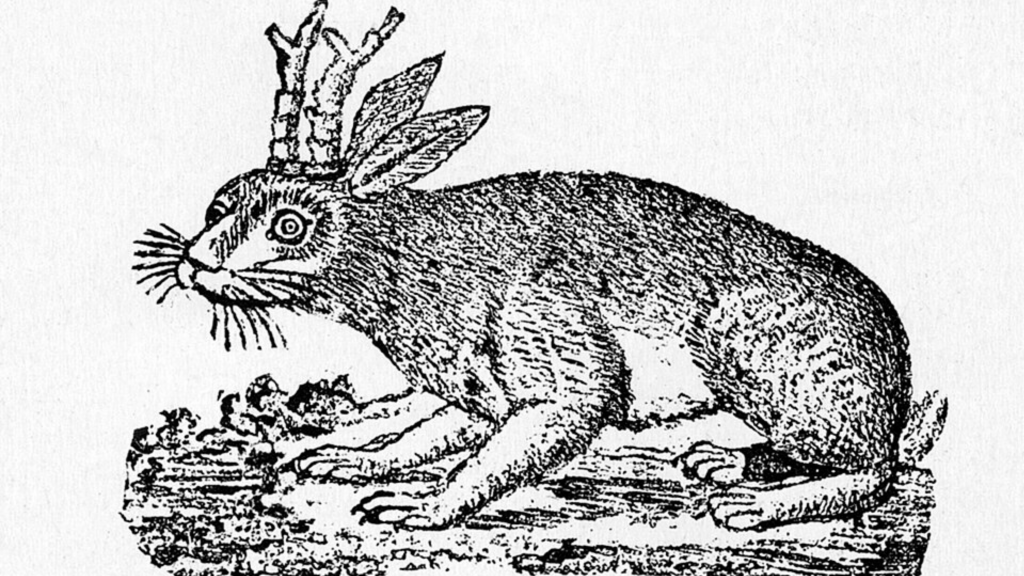
Most places in the world have a legend of an elusive mythical creature. Bavaria’s version of this is the Wolpertinger which hides in the Alpine forests. This creature is said to take various forms combining animal features. One of the most well known depictions say it has a bunny’s head, a squirrel’s body, and a bird’s wings and feet. However, no two Wolpertingers are the same.
These are supposedly shy and hard to catch creatures. There have only been a few theories on how to catch it. The first is to take a beautiful woman to the forest during a full moon. However, this will only work if the “right man” takes her. The second is much simpler and involves sprinkling salt on its tail.
So, is the Wolpertinger real? Many people disagree, but it is more likely to be a myth. The actual origin of this story was probably due to a rabbit infected by the Shope papilloma virus, which causes rabbits to grow horns on their face. In the 1800s taxidermists heard of this and took advantage of it. They would assemble multiple animals together to sell to tourists, advertising it as the mysterious Wolpertinger. You can even see these for yourself at the German Hunting and Fishing Museum.
The Müchner Lindwurm
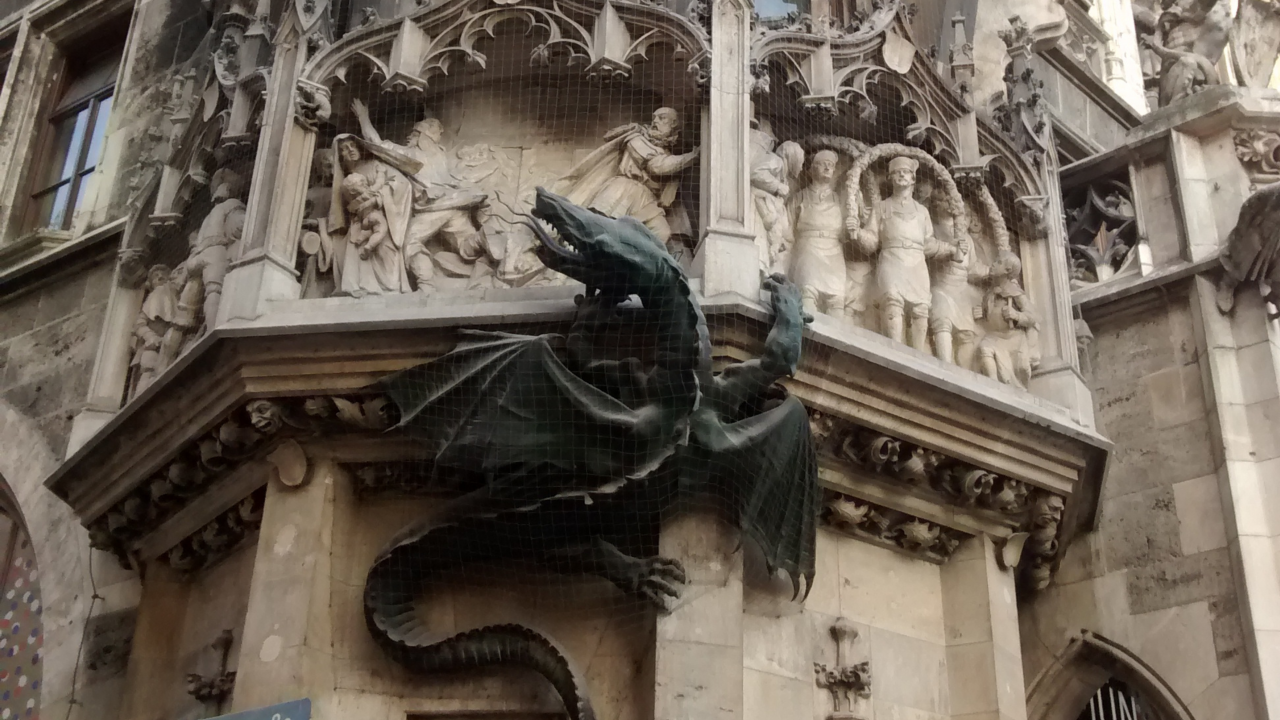
This folktale dates all the way back to the Middle Ages. The story claims that a giant dragon flew through Munich spreading the Black Plague. Soon almost 5,000 people had been killed and a few men decided they had had enough. They were going to fight the dragon. In the end they managed to kill it with the use of a cannon.
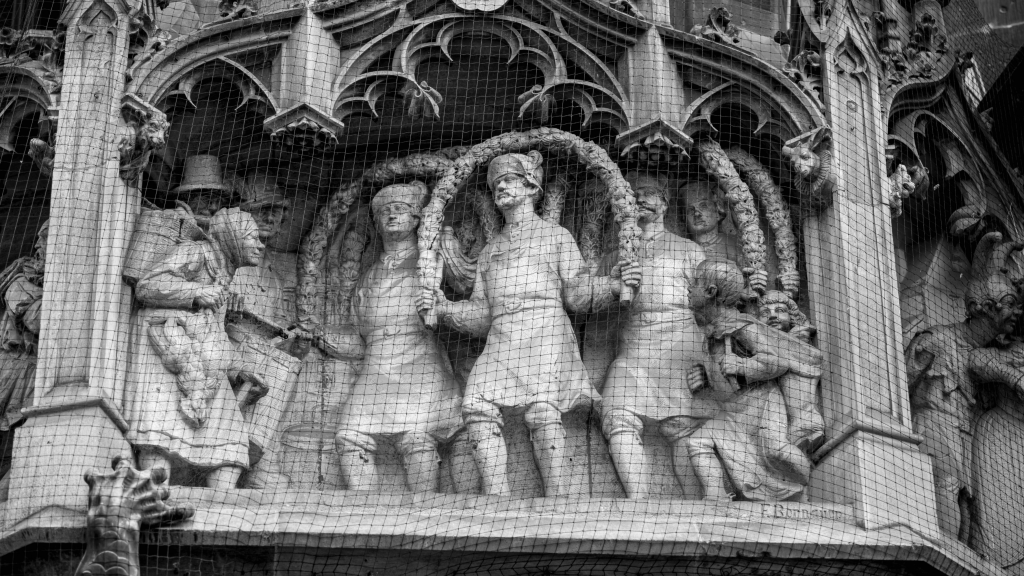
Even once the Lindwurm had been killed, the people of Munich lived in fear. They refused to leave their homes as they didn’t want to be infected by any remaining sickness. It wasn’t until the Coopers, traditional barrel-makers, began dancing in the streets that people felt safe, and life returned to normal. This is a tradition that still happens to this day. Every seven years German’s gather for the Schäffler dance in remembrance of the plague’s end.
This legend is once again more than likely a myth. Even though the Black Plague was real, there is no proof that a dragon was the one to spread it. Even so, you can see a depiction of this legend on the bottom right corner of the new town hall, where Weinstraße intersects with Marienplatz.
More Than a Myth
These three legends clearly show that folklore is often truth mixed with myths. However, this doesn’t make these stories any less important. They still allude to real historical events and provide a more entertaining way for humanity to share our cultures and identities. In the end, it’s important to continue this tradition. Afterall, there’s no real proof that they never actually happened.